
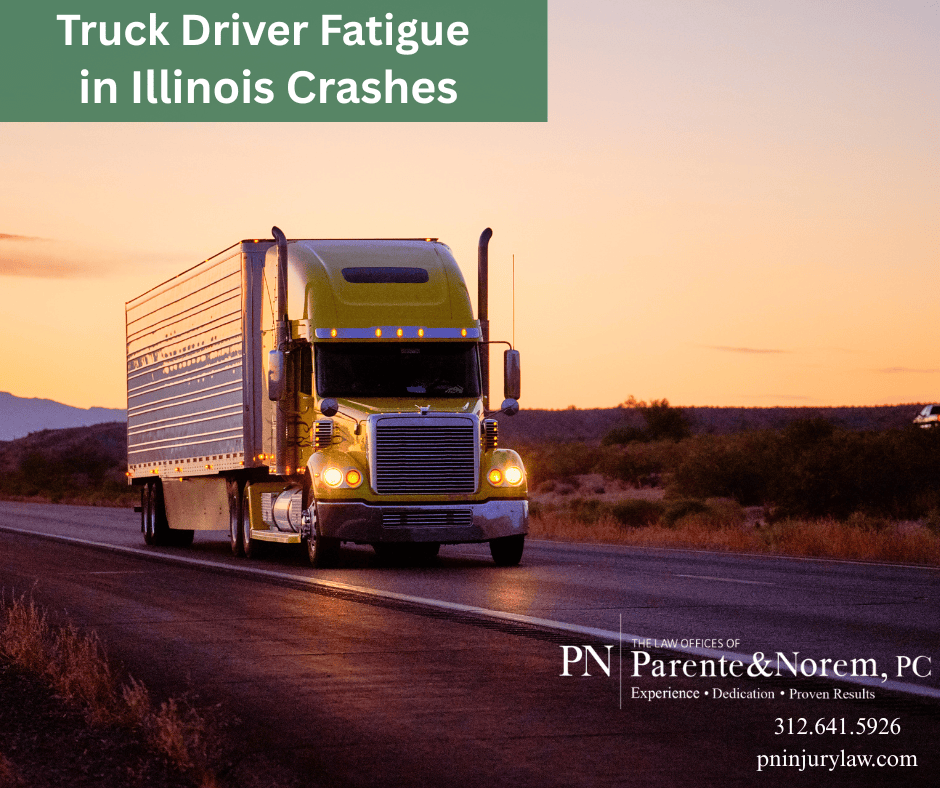

Truck driver fatigue is one of the most dangerous and preventable causes of serious commercial vehicle crashes in Illinois. Despite federal safety regulations designed to limit how long truck drivers can stay on the road, fatigue continues to contribute to an estimated 13% of large truck accidents nationwide, with Illinois ranking among the top states for semi-truck crashes.
On heavily traveled interstates like I55 and I57, long hours, tight delivery schedules, and pressure from trucking companies create conditions where exhausted drivers are still operating massive vehicles at highway speeds. When fatigue sets in, the results can be catastrophic for passenger vehicle occupants.
Why Fatigued Driving Is So Dangerous
Unlike drunk or distracted driving, fatigue is often invisible, until it’s too late. One of the most serious risks associated with truck driver fatigue is known as “microsleep.” These brief episodes occur when a driver unintentionally falls asleep for a few seconds, often without realizing it.
At highway speeds, even a few seconds of lost consciousness can cause a truck to drift out of its lane, miss stopped traffic, or overcorrect. Fatigue related crashes commonly result in:
- Rear end collisions
- Lane departure crashes
- Jackknife accidents
- Rollover crashes
Because of the size and weight of semi trucks, these accidents frequently cause severe injuries or fatalities for those in smaller vehicles.
Long Hours and Schedule Pressure
Federal Hours of Service (HOS) regulations limit how long commercial truck drivers can drive without rest. These rules are meant to reduce fatigue and protect everyone on the road. However, fatigue remains a serious issue because drivers may still feel pressure to push beyond safe limits.
Common contributing factors include:
- Unrealistic delivery deadlines
- Pay structures based on miles driven
- Inadequate rest opportunities
- Pressure from employers or dispatchers
Even when regulations exist, violations happen. Drivers may skip required breaks, falsify logs, or continue driving when they are physically unable to do so safely.
Illinois does not have a specific law that prohibits driving while tired. However, fatigued driving can still form the basis for a claim.
An injured person may be able to hold a truck driver liable if evidence shows the driver:
- Violated federal Hours of Service rules
- Ignored required rest breaks
- Continued driving despite clear signs of fatigue
In many cases, trucking companies may also be held responsible. Employers can be liable if they encourage, require, or knowingly allow drivers to exceed legal driving limits or operate while fatigued. This is especially important in Illinois truck accident cases, where corporate policies and scheduling practices often play a role.
Illinois consistently ranks among the states with the highest number of large truck crashes. For everyday drivers, fatigued trucking creates an elevated risk; particularly on major freight corridors and interstates.
Protecting Your Rights After a Truck Accident
Truck accident claims involving driver fatigue are complex. They often require reviewing logbooks, electronic data, company policies, and federal safety violations. Acting quickly is critical to preserving evidence and protecting your rights.
Before insurance companies limit your options, speak with an experienced Illinois truck accident attorney. Early legal guidance can make a meaningful difference in the outcome of your case.
At The Law Offices of Parente & Norem, we understand how preventable fatigue-related crashes devastate families. Call or text us today at 312.641.5926 for a free evaluation of your case. If you or a loved one has been injured in a truck accident in Illinois, it’s important to understand who may be responsible and what compensation may be available.
