
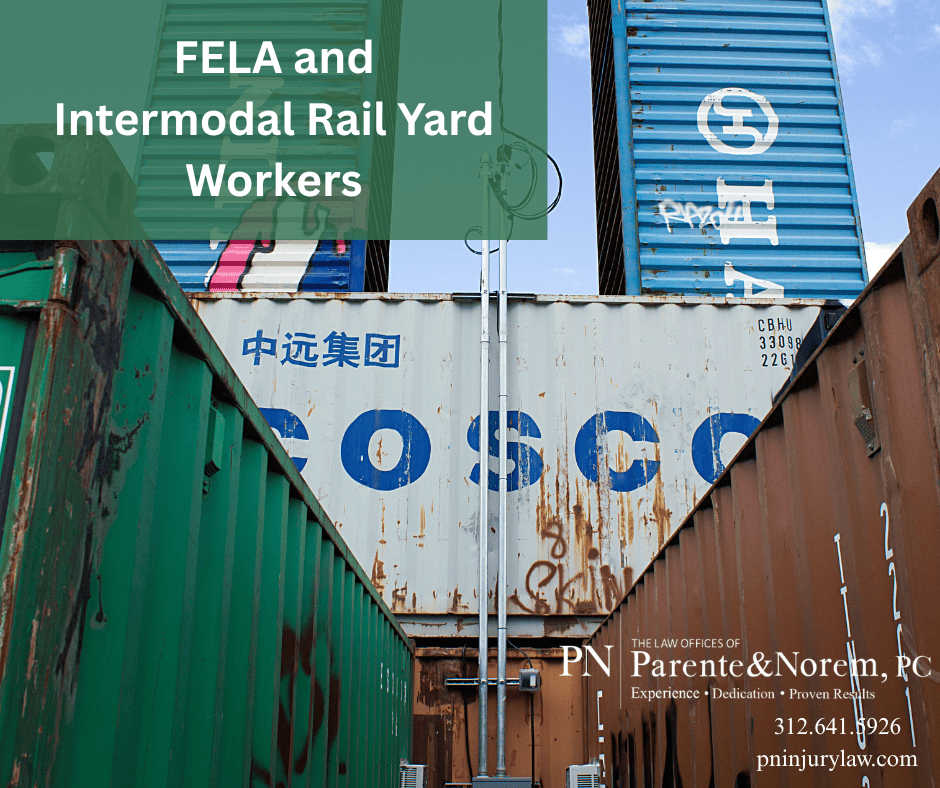

Intermodal rail yard workers play a critical role in keeping freight moving across the country. From switching operations and loading containers, to track maintenance and derailment cleanup, this work is physically demanding and often dangerous. When an injury happens on the job, workers deserve full and fair compensation, not just for medical bills and lost wages, but for the real impact the injury has on their lives. For many railroad and intermodal workers, compensation may be available under the Federal Employers’ Liability Act (FELA).
Understanding FELA and How It Protects Rail Workers
The Federal Employers’ Liability Act is a federal law specifically designed to protect railroad workers who are injured while performing their job duties. Congress enacted FELA in recognition of the inherent dangers of railroad work and the need to hold railroads accountable for unsafe working conditions.
Unlike traditional workers’ compensation systems, which limit recovery to medical expenses and a portion of lost wages, FELA allows injured railroad workers to seek broader damages. Under FELA, compensation may include:
- Past and future medical expenses
- Past and future lost wages and loss of earning capacity
- Pain and suffering
- Emotional distress
- Permanent disability or impairment
This means injured workers can pursue full compensation that reflects the true scope of their injuries, not just a narrow benefits schedule. To recover under FELA, a worker must show that the railroad’s negligence (such as unsafe equipment, inadequate training, poor yard design, or failure to enforce safety rules) played a role in causing the injury.
Intermodal Yards, Contractors, and Liability Issues
Many jobs once performed by railroad employees are now outsourced to third party contractors and subcontractors. This includes intermodal yard operations, switching, loading, track maintenance, and derailment cleanup. Railroads often attempt to reduce their legal exposure by shifting responsibility to outside companies through contracts and liability waivers.
This creates confusion for injured workers, especially contractor employees, who may be told they have no claim or are limited to basic workers’ compensation benefits. However, courts have repeatedly held that liability under FELA cannot always be contractually waived, particularly when the railroad maintains control over the work, the yard, or the safety conditions.
In certain situations, injured intermodal workers may still be able to pursue a FELA claim against the railroad, even if they are technically employed by a contractor. Determining who is legally responsible requires a detailed investigation into the work being performed, contractual relationships, and the level of control exercised by the railroad.
Why Hiring The Law Offices of Parente & Norem Matters
FELA cases are complex, and railroads aggressively defend them. Shortly after an injury, workers are often contacted by railroad claim agents who appear helpful but are trained to minimize payouts and protect the company’s interests. Having experienced legal representation from the start can make a critical difference.
Parente & Norem has decades of experience representing injured workers and taking on large corporations and insurance carriers. Our firm understands the railroad industry, intermodal operations, and the legal strategies railroads use to avoid responsibility. We work with trusted experts to investigate accidents, preserve evidence, and build strong cases that fully document our clients’ injuries and losses.
Most importantly, we fight to ensure injured intermodal rail yard workers are treated fairly and compensated fully; not pressured into quick settlements that fail to account for long-term consequences.
If you or a loved one has been injured while working in a rail yard, you do not have to navigate the legal system alone. Contact The Law Offices of Parente & Norem today at 312.641.5926 or fill out a form here on our website to learn your rights and explore all available avenues for compensation.
