
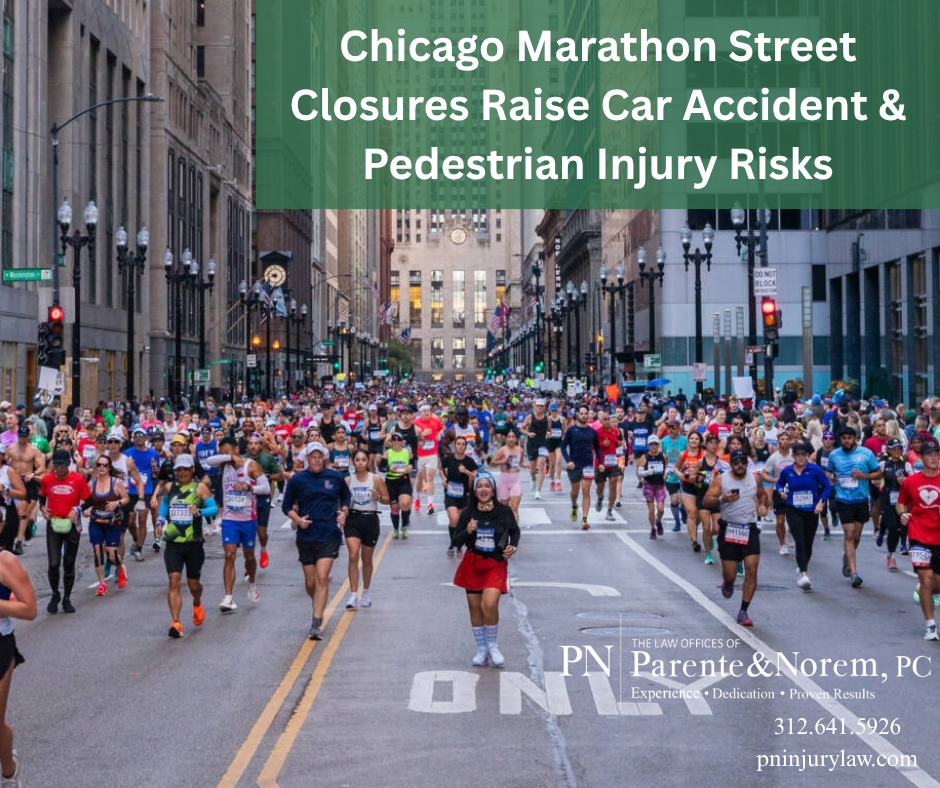

Marathon Sunday is almost here. On Sunday, Oct. 11, 2026, tens of thousands of runners will take to the streets for the 48th Bank of America Chicago Marathon, with crowds of spectators lining the course from the Loop to the neighborhoods and back. It is one of the best days of the year to be a Chicagoan. It is also one of the most complicated days to drive in the city.
Closed streets, detours, packed sidewalks and drivers in a hurry to get around it all create real risks for car accidents and pedestrian injuries. Here is what to know before race weekend, and what to do if you are hurt.
When Are the 2026 Chicago Marathon Street Closures?
According to race organizers, streets along the marathon course close to traffic starting at 6 a.m. on Sunday, Oct. 11. No-parking zones along the route are enforced beginning at 1 a.m., and vehicles left on the street will be ticketed and towed. The wheelchair start is at 7:20 a.m., and the race begins at 7:30 a.m.
Streets reopen on a rolling basis as the last participants pass, and the Chicago Police Department may close additional streets if needed. Some Grant Park roads have been closed since late September for race setup. Because the marathon falls on Columbus Day weekend, expect heavy downtown traffic to continue into Monday.
Why Do Car Accidents Increase During Marathon Week?
Large events change the way people drive. Even experienced Chicago drivers find their usual routes blocked, and that leads to the kinds of mistakes that cause crashes:
- Sudden detours and lane closures. Barricades and police-directed intersections force drivers to merge, turn or stop unexpectedly.
- GPS rerouting. Navigation apps push heavy traffic onto residential side streets that are not built for it.
- Frustration and rushing. Drivers stuck in gridlock may speed once traffic opens up, run yellow lights or make illegal U-turns.
- Unfamiliar drivers. Out-of-town visitors are navigating Chicago's one-way streets and multilevel roads for the first time.
- Rideshare congestion. Pickups and drop-offs near the course mean double-parked cars and passengers stepping into traffic.
- Distraction. Drivers glancing at the race, checking closure maps or texting about meetup spots are not watching the road.
Why Are Pedestrians at Greater Risk on Race Weekend?
Marathon spectators are constantly on the move. Many cross streets quickly, sometimes mid-block, to catch their runner at the next mile marker. After the race, tired runners and their families head to CTA stations and parking garages just as nearby streets reopen and traffic surges back. With an early-morning start, many people are also walking in low light before sunrise.
Illinois law requires drivers to stop and yield to pedestrians in crosswalks and to exercise due care to avoid colliding with any pedestrian. When a driver fails to do that, the results can be serious, including broken bones, head injuries and spinal cord injuries.
How Can Drivers and Spectators Stay Safe During Marathon Week?
If you are driving:
- Check the official street closure map at chicagomarathon.com and sign up for NotifyChicago alerts.
- Take the CTA if you can, and allow extra travel time if you cannot.
- Slow down near barricades, detours and newly reopened streets.
- Put your phone away. Illinois bans handheld phone use while driving.
- Watch for runners in foil blankets and medals crossing after the race.
If you are cheering:
- Cross only at intersections or designated crossing points, and follow directions from police and volunteers.
- Stay behind barricades and keep children close.
- Stay alert as streets reopen and traffic returns.
What Should You Do If You Are Injured in a Marathon-Week Crash?
If you are hit by a car or involved in a crash during race weekend, the steps you take right away can protect both your health and your claim:
- Call 911 and get medical care, even if you feel fine. Some injuries do not show symptoms right away.
- Take photos of the scene, vehicles, barricades, detour signs and your injuries.
- Get contact information from the driver and any witnesses.
- Ask for the police report number.
- Be careful with insurance companies. Do not give a recorded statement before speaking with a lawyer.
Illinois law sets strict deadlines for filing personal injury claims, so it is important to act promptly.
Talk to a Chicago Car Accident Lawyer at Parente & Norem
If you or a loved one was injured in a car accident or pedestrian accident during Chicago Marathon week, the attorneys at The Law Offices of Parente & Norem, P.C. can help you understand your options.Call or text us at (312) 641-5926 or fill out a contact form here on our website.
To every runner lacing up this Sunday good luck, and enjoy the race. To everyone else, slow down, stay alert and help keep marathon weekend safe for all.