
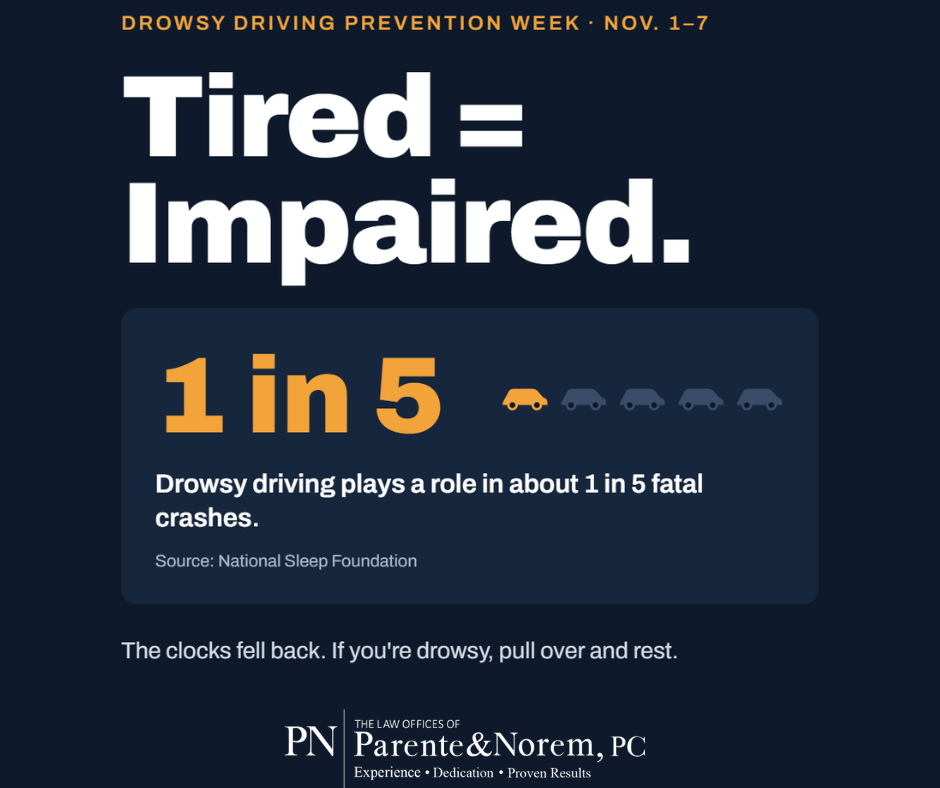

The Law Offices of Parente & Norem, P.C. is urging drivers across Chicagoland to treat fatigue the same way they treat alcohol; as an impairment that has no place behind the wheel. The call comes during the National Sleep Foundation's Drowsy Driving Prevention Week, which runs Nov. 1-7, 2026, and began the same morning daylight saving’s time ended.
The National Sleep Foundation estimates that drowsy driving plays a role in about one in five fatal motor vehicle crashes on U.S. roads. In its 2026 Drowsy Driving Report, released Oct. 29, the foundation also estimated that 61% of U.S. adult drivers, about 145 million people, have driven while impaired by sleepiness at least once.
Why does the time change raise the risk of drowsy driving?
Clocks fell back one hour at 2 a.m. Sunday, Nov. 1. The extra hour sounds like a gift, but the shift can disrupt sleep for days. It also moves the evening commute into darkness. For many Chicagoland drivers, the drive home now happens after sunset, when the body is already winding down for the night. Darker roads, shorter days and the start of holiday travel make November a high-risk month.
What are the warning signs of drowsy driving?
Pull over as soon as you notice any of these signs:
- Frequent yawning or blinking, or heavy eyelids
- Drifting out of your lane or hitting rumble strips
- Missing exits, turns or traffic signs
- Not remembering the last few miles
- Tailgating or changing speed without meaning to
How can drivers prevent fatigue behind the wheel?
The firm recommends these steps, which track National Sleep Foundation guidance:
- Get seven to nine hours of sleep before driving, especially before a long trip.
- On road trips, stop every two hours or 100 miles, and bring a passenger who can share the driving.
- Avoid driving during natural low points, roughly midnight to 6 a.m. and midafternoon, when possible.
- Check medication labels for drowsiness warnings.
- If you're tired, stop in a safe, well-lit area and take a 20-minute nap. Cold air and loud music do not cure fatigue.
- Employers who schedule overnight or double shifts should think about how workers get home safely.
Can drowsy driving be proven after a crash?
There is no breath test for fatigue, which is one reason safety researchers believe drowsy-driving crashes are underreported. But fatigue leaves a trail, and an experienced legal team knows where to look.
Evidence that can help show a driver was too tired to drive safely includes:
- Crash scene clues. A vehicle that drifted across the center line or off the road with no braking or skid marks can point to a driver who fell asleep. Failing to stay in a lane can also violate Illinois law.
- Event data recorder ("black box") data. Speed, braking and steering inputs in the seconds before impact can show a driver never reacted.
- Phone records. Late-night activity, or long gaps in it, can help show whether and when a driver slept.
- Work schedules and timecards. Double shifts, overnight shifts and long commutes can establish how long a driver had been awake.
- Trucking logs. Commercial drivers must follow federal hours-of-service limits, and electronic logging device data can reveal violations.
- Receipts, GPS and toll records. These help build a timeline of the hours before the crash.
- A driver's own words to police or witnesses, such as "I must have dozed off," can be powerful evidence.
In Illinois, a driver who causes a crash while too tired to drive safely may be found negligent. When the at-fault driver was on the job, the employer may also be responsible. Trucking companies that push drivers past hours-of-service limits can be held accountable, too.
Because electronic logs and black box data can be overwritten or lost, acting quickly matters. Illinois law sets deadlines for filing injury claims, and those deadlines depend on the facts of each case.
What should you do if a drowsy driver hit you?
Call 911 and get medical care, even if you feel fine. Photograph the scene, collect witness names and write down anything the other driver says about being tired. Then talk with a Parente & Norem personal injury attorney before giving a recorded statement to any insurance company.
Parente & Norem represents people injured in car and truck crashes throughout Chicagoland. To schedule a free consultation, call (312) 641-5926 or fill out a contact form here on our website.